Wednesday, December 10, 2008

Cairo College Life in 1957

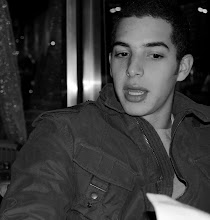
For some reason, I adore black and white photographs. Maybe its just the old timer in me who craves anything vintage, but more specifically, I think it is the feeling in me that yearns to have been born in a different, more romantic time period. I like to see how older generations at my age would dress and behave. I like to imagine what it would be like if I lived among them.

I was blog surfing today when I stumbled upon a priceless collection of vintage black and white photo series on a fellow blogger's page, The Egyptian Chronicles. I just spent hours listening to Umm Kalthoum and browsing through photos of Cairo, King Farouk, and Nasser. This is the first comprehensive collection of photographs that trace Egypt's history in black and white. But what struck me out of the collection was bunch of photos students at the American University in Cairo. I studied for one semester at the AUC in the summer of 2007 and enjoyed it tremendously. I would have to go to the extent of saying that it was the highlight of my college career thus far.Honestly, I could spend days just swaying my head to Umm Kalthoum or Abdel Halim Hafez's music and flipping through these photos as if they were a reminder of my past generation. Anyways, I hope you can enjoy the couple I've posted here and those on the Egyptian Chronicles page. Here, I just post the ones that truly intrigued me about college life in Egypt back then.

My Aspirations: Economic Development

I took my Economic Development class's final exam earlier this week, and now that I look at it, I lament that the semester has concluded. Of any of the classes I had taken at this university, this was by far the most fruitful and applicable to my aspirations in life. This was a class that truly covered such a wide array of topics that I feel equipped to go out and solve the world's predicaments...believe me, that's only fraction of the idealist zeal in me.

While taking the final exam for that class, I thought I was a member of Egypt's technocratic, neo-liberal economic cabinet drafting solutions to tackle corruption, poverty, and the various other problems that developing countries like Egypt face. This was truly a class in which every lecture awed me. I felt that my mind was being stretched beyond imagination, where, for once, I felt knowledge convert to insight. This class truly brought me to the realization that it is a true shame that 1/6th of the world's inhabitants lives in extreme poverty and that one must be the change they want to see in the world, as Gandhi would put it. Hopefully this class will only serve as a stepping stone for my career aspirations to become an asset for my country and the developing world.

It all began after attending a lecture given by Nobel Laureate Robert Solow here at the University of Virginia. I recall Solow walking past me when entering the room at Newcomb Hall. I was amazed that I was seeing a role model before my eyes. I recall his lecture divulged into the complexities of labor and its supply in the Solow Growth Model, but to be quite frank, I was almost clueless about what he was discussing during that lecture.
I never would have imagined that Solow's model would be the core theory of economic growth in the Economic Development class I have just taken. The fact that I had seen Solow before my own eyes was a tremendous motivator to grasp the concepts behind his proposed model that have revolutionized how policymakers finetune their economies nowadays. What I truly appreciate about the model is that it bridges the gap between my two major fields of study, i.e. economics and engineering by factoring in the indispensable variable of technology to account for output growth per worker. Empirically, this model predicts that 4/5 of growth per worker in the US is due to technical progress. I am an ardent believe that only through technilogical innovation can a country "catch up." Solow currently is a professor at MIT, my dream institution for continuing my economics studies and where some of Egypt's brightest economists, such as Egypt's Minister of Finance Boutrous Ghali, earned their PhD degrees.

It is only after earning my education will I strive to attain a position in a multinational institution, such as the World Bank or IMF so as to attain the foremost experience that international economics has to offer. Ultimately, I hope to bring this wealth of knowledge back to Egypt. I am a firm believer that import of knowledge and technology are the core mechanisms to advance a country's economic standing. My dream is to someday speak at one of the World Economic Forum conferences, which in my eyes represent the forefront of global policy making.

These are all dreams of course, but I believe that it is only when you dream big and aim for the moon that you may land amongst the stars. It is the little things in life, such as merely seeing a personage, such as Sollow, or taking a college class that an inspire you to change the world, at least I believe.

Travel & Expectation

"If our lives are dominated by a search for happiness, then perhaps few activities reveal as much about the dynamics of this quest-in all its ardor and paradoxes-than our travels"
-Alain de Botton
As promised to a very special friend who is currently traveling, I will reflect upon experiences traveling as a prelude China excursion this winter. I've always used my diary as a travel log, but for once, I'm going to experiment with travel blogging to track my experiences, feelings, and stream of consciousness when traveling.

I won't go so far as to dub myself a globe-trotter, but I can testify that I've seen a fair share of this world since my youth to say a thing or two about the experiences entailed with traveling. As a child, traveling was a nuisance, being pulled from one corner of the world to the other without my consent, but today, it has become a passion that I yearn for as I sit in my desolate room. I miss the excitement, the anxiety, the joy, and the stress of it all. Although I sit for long hours in my room with the dim light on, I am actually traveling beyond your wildest imagination. My mind takes me from Fiji to Switzerland in a matter of seconds. In lieu of the nomadic lifestyle I once led, I have resorted to books as the cure to my longing to see the world. Whether it's Flaubert's oriental description of the Nile crocodiles, Wordsworth's poetry of the Alps' grandiose scenery, or diary entries about Che's cruises on the Mambo Tango down the Amazon, I devour these experiences with a spirit that makes me hungry to get out there and make my trails in the world.

As a sit in this box I have come to call my world, with Henry Mancini playing smooth jazz as the rain drips outside, all I can do is expect...i.e. expect the next time the wind will blow me off my feet to another continent. From my experiences, this is the first step of travel: expectation. As the dull gray clouds paint the sky, I reminisce on the exotic sunny days of Hainan where all there was to worry about was who would get to the beach volleyball court first. Hainan is the ideal retreat for the mind, soul, and body.
When I reminisce about my stay in Hainan, the subtropical island in the south of China, I conjure images of palm trees on a bright sandy beach set against a magnificent background of misty hills, where coconut juice is the traditional thirst quencher, and the only form of commerce is the sale of peals and sea shells. And the best thing about this jewel was that it was undiscovered by the irksome tourists that seem to infest every natural beauty that exists on this plant. Now don't get me wrong, I am a tourist myself, but I try to avoid being one... I endeavor to experience life as the locals live it. Anyways, before I go on farfetched tangent, let me return to the subject at hand: expectation. When reading about the great voyages of Captain Cook, Ibn Battuta, or even the fictional Robinson Crusue, many expectation to travel is set in motion.
An intriguing conclusion I have come to subsequent to my readings of travel literature in my expectation to actually travel is that there is a stark difference between the imagination and reality that travel entails. Thus far, I have painted a positive image on travel based on my experiences and readings, but to reveal the other side of the story behind expectation may be rather cumbersome. There is the pessimist's view that travel may be an incessant nuisance. The stress of packing, long hours of flying, tedious waits at transit airport terminals, different time zones, jet lag, etc...why bother, when one can stay in one's comfort zone. Moreover, the disappointment of reaching the destination and finding it below one's expectations can all take the toll of detest for travel. In my eye's its a matter of attitude. You make the best of what you've got. I was once told by a foreigner in Egypt that you can paint Cairo with the colors of clamor and chaos or with the colors of beauty and serenity. You are the painter and the strokes of the brush are up to you. The dark side to expectation is that the imagination that it encompasses may deceive the prospective traveler.
Unlike in literature, where travel is fed to you, it is your duty to proactively experience travel. It is easy to experience travel in art, music, and literature because the best elements of the experience are presented to you. Expectation only sheds light on the highlights of travel and omits the boredom. Some may argue that "imagination could provide a more than adequate substitute for the vulgar reality of actual experience," as Des Esseintes discerns, yet I have always resolved that those who have not traveled have not lived life.

Monday, December 8, 2008

Art Gallerying

Although I should be studying for exams, I am going to take this blogging break to reflect upon one of the most enjoyable activities I've taken part in since coming to Charlottesville. Aparently Charlottesville has a very eclectic art scene that I had no idea existed. I know of UVa's lousy art museum, but that didn't cut it for me. The only thing I found remotely appealing the only time I went to the museum was this Aphrodite-like statue:
I was craving something more profound, something more reflective of Charlottesville that gave it its own taste of art. Luckily, I have two friends who attend the Art school. Serina is a art printing major and Denise is a photography major. They nonchalantly invited me to tag along on as they went art gallerying last Friday. I was reluctant to go considering that I have final exams, but I promised them I'd go, and I'll never regret coming. Apparently, art gallerying is a Charlottesville tradition whereby all of the city's galleries put up their new art work on the first Friday of each month. I had run into a couple of hole-in-the-wall art galleries but would have never fathomed of hopping from one gallery to another until I would see all of these galleries in one round! Luckily Serina and Denise were there to be my tour guides. We first went to a holiday party at the art school, which was packed with the artsiest people I've seen on university grounds yet. The art school is structure of magnificence in and of itself:
All this art was such a breather for someone who is used to living the rigid life of an engineering student. Serina then showed me everything from how to make paper, the print pressing process, the photography dark room, and actual painters who were working on some of the most amazing works I'd seen yet. After nibbling on a few snacks, we hopped on the trolley to the downtown mall, where we viewed one of their professor's galleries that was on display. The work was magnificent as you can see below:We then went from gallery to gallery downtown. We stopped by the Mudhouse, which is my regular stop when I'm down at the Mall and realized that there was a new photography exhibitions. One of the galleries even had a mini-jazz band performing to entertain the art viewers:
What truly fascinated me about all this new art was that it all had a message, that it all showed the artists' perception of the world, it expressed those emotions that one can only transmit through art, those impressions that Goethe can only express through literature. In this case, art captured a moment in time and allowed the viewer to infer it as he wished based on his own experiences. I was amazed at how art artists could be so passionate about what they do, the extent to which they could become so hysterically eccentric about their works. It hit me that art was a reflection of their life.
For someone who comes from a very technical background like myself, it was difficult to fully absorb the essence of the art we were viewing in these galleries, but I was gradually learning to appreciate the art. It really captured my imagination. For example there was a painting to an island that led me to drift into thoughts of myself sailing to distant exotic lands, where the climate is tropical, but then I was brought back to reality when seeing that it was freezing outside. We then went into a very unique gallery of a friend of Serina's. This gallery was merely a garage with jars in it. Each of these jars possessed a object that was collected from different parts of campus and hung up over a map of the university corresponding to where each of these objects were found:
I thought it was a pretty subtle idea. That's what it is...the idea behind art is what makes it Van Gogh quality or rubbish. The longer I was exposing myself to this art, the more I felt it sink into me... I was beginning to appreciate and live art.

We then ended the night at some Chinese dumpling place where we discussed the two worlds we come from, I from one that looks rather dull, grey, and systematic, and they from one that is vibrant, dynamic, and vivid. The grass is always greener on the other side I remind myself, but I am glad that I can include art gallerying to another one of my escapist hobbies.

On the Greek Riots

On the topic of revolution, I was awed by the recent clashes between the Greek students and government. Why have a been following this contemporary event. Sure it has the revolutionary fervor that I admire, but more importantly, it is a display of how people can determine their destiny by taking matters into their own hands. I am convinced that students, i.e. the future generation and holders of knowledge, are the ones that can bring about change in any country. We have seen this before with the Iranian Revolution where students were the main drivers of change and with the Parisian uprisings of 1968 where anti-governmental proponents of change influenced change in the system. These revolts weren't mere hooligan mutinies, but rather backed by profound philosophies, where the philosophers themselves took to the street as was the case with Jean Paul Sartre in Paris. So why is when one student is is killed in Greece that all his peers take to the street? Why doesn't this take place in Egypt, for example, where police brutality has become a norm. I have come to question whether some people are innately apathetic and others are born to be revolutionaries? I have to conclude that I have come to admire the romantic revolutionary zeal of the Greek students, which still give hope to any revolutionary out there who seeks to bring change against the established order.

Friday, December 5, 2008

Istanbul Of Egypt

Ever since my first visit to Istanbul, I have always wondered how a city that bridges the East and West could be so magnificent. I don't think that it is cliche to consider Istanbul to be the best of both worlds. No wonder why it is the only cosmopolitan city that connects two continents. Obviously Istanbul's model is historically unprecedented and based on very historical interactions between Greek, Roman, Byzantine, and Ottoman heritages. 
But while looking out of my family's balcony at the Asia and Europe, I wondered to myself, wouldn't it be possible to emulate such a model in Egypt? My initial feeling was that I wanted to bring such a beautiful sight to Egypt. Cairo another major city in the Middle East that shares many of the same roots as Istanbul, but its location limits its prestige. I wondered to myself why Egypt doesn't possess a city of such grandeur as Istanbul that connects its two continents: Africa and Asia. More significantly, I think that such a city would be protege of Istanbul because it provides the main water transportation between Europe and Asia, being the nautical connector between the East and West. Wouldn't such a city usher an era of cultural exchanges of civilizations between Afro-Asian heritages as Istanbul has done with the East and West?
It is imperative to understand that such a city that would connect Asia to Africa would be a modern version of Istanbul considering that the Bosphorus has existed since the dawn of civilization whereas the Suez Canal is only a century old. Although the Suez didn't exist back in the day, Egypt has always connected Asia and Africa through the Nile. The Greeks, Persians, and Romans have always sought a connection between the Mediterranean and Asia. Evidence of this is the Darius Inscription:
"Saith King Darius: I am a Persian. Setting out from Persia, I conquered Egypt. I ordered this canal dug from the river called the Nile that flows in Egypt, to the sea that begins in Persia. When the canal had been dug as I ordered, ships went from Egypt through this canal to Persia, even as I intended."
I envision that if the cities on the Suez, such as Port Said, Ismailia, and Suez are heavily invested, in, they can form a metropolis that would define the premier real estate of Egypt. More than the Bosphorus, the Suez Canal is the most important geopolitical waterway in the world. I am sure that real estate on this piece of land that connects the Mediterranean to the Red Sea and Africa to Asia would have the potential to prosper in magnificence as Istanbul. This is not to mention that this city would only be one hour away from Africa's largest city, Cairo, and from some of the most beautiful natural scenery in the world in Sinai. 
What is extremely interesting is that I feel the fate of the developing a city on the Suez that is as cosmopolitan as Istanbul is inherently inevitable. Historically, Istanbul and the Suez share the tied history considering that the Constantinople Convention of the Suez Canal is what governs the commerce and politics of the world's most travelled waterway. Just as the history of Istanbul and the Suez are tied to one another, so will their future, I believe.

"If I had not been an Egyptian, I would have wished to become one"

Working on Arabic homework as the clock struck 5:30am, Yasmine and I had a discussion which had me thinking the whole day. The play we were reading was about the Palestinian struggle, Arab nationalism, and Zionist imperialism. We lamented how in a class titled Modern Arabic Fiction, the concurrent themes of all the works we'd read were regarding the melancholy of the Arab World. I inquired, why is the case not "art for the sake of art" as in the West, why must our works be a stark reflection of our dire state of affairs, why can't we sublimate the frustration of being Arab into forms of bliss? In class, our professor explained that such sublimation was looked down upon. How could a people celebrate their rich heritage and history when they are oppressed by the governments and see their fellow brothers suffering everyday. Realism was emphasized in art and any deviation was looked down upon. The question of art and its reflection of reality is a very dense topic that I shall discuss at a later stage, but I wish to divulge into what the had been circulating in my head the whole day. 

I have lived in the U.S. more than I have lived in Egypt and have always thought of myself as an Arab simply because that is how I am perceived in the U.S. Despite this being the case, Yasemine brings up a very interesting point. In Egypt, we are never considered "Arab", but rather merely Egyptian. Interestingly, we tend to look at an Arab as being someone from the Gulf. This is interesting because in Turkey, I never referred to myself as Arab but rather as an Egyptian and so did the Turks. They saw a stark difference between Egyptians because of the rich monarchic Ottoman history we share with them and those from the Gulf whom the only exposure the Turks have of them is seeing them in large flocks roaming malls in Istanbul. What about those from El-Sham (i.e. Lebanon, Syria, etc...), well they don't really consider themselves Arab to the extent as the Gulf. I've even met some Lebanese who consider themselves Phoenician. 

In a word, the conclusion we came to was that we tend to consider ourselves Arab, or are rather depicted as Arabs, in the U.S. whereas we are consider ourselves primarily Egyptian in Egypt, because we are a minority here in the U.S. Now this is not to rule out that an Egyptian is not an Arab. I have met some Egyptians who completely rule out being Arab whereas others embrace it wholeheartedly. I tend to lie in between. Being Arab is a very diverse identity, but being Egyptian is one that is more diverse. At Roberto's house, Osama, Ramy, and I were discussing with a Nubian the definition of an Egyptian, and it struck me that there is no single definition. We are highly exposed to Mediterranean culture, are stranded between Africa and Asia, our religions vary from Islam to Coptic Christianity, and we speak Egyptian Arabic, and our skin color varies from black to white and every thing in between. We are most renown for our Ancient civilization, yet all around us are traces of the Greco-Roman, Arab, and Ottoman heritage. 

Where does this put us as a people? It seems like we are a nucleus of diversity in the world. So why is it that Egyptians that come to the States are considered Arab? Well, it is because we are such a minority that the only proximity with any remotely close culture is that with our fellow Arabs, because there is so few of us here. A study reveals that "Egyptians have a reputation of preferring their own soil. Few leave except to study or travel; and they always return... Egyptians do not emigrate. Most of all, they have a sense of all-encompassing familiarity at home and a sense of alienation when abroad." This exactly explains how I and many other Egyptian students feel here. 

The issue to travel brings an interesting point, which is that Egyptians are always longing to reunite with their motherland; this was something I have observed with every compatriot I have met. Although we embrace the rich culture of The Arab World, I have come to realize that it is only one of our many identity traits. The realization I made was that an Egyptian is a diverse and rich culmination of various other identities, including Arab, Mediterranean, Roman, Greek, Turkish. Only when we embrace, harmonize, and orchestrate these identities can we truly realize what it means to be an Egyptian.